APX
KLOW
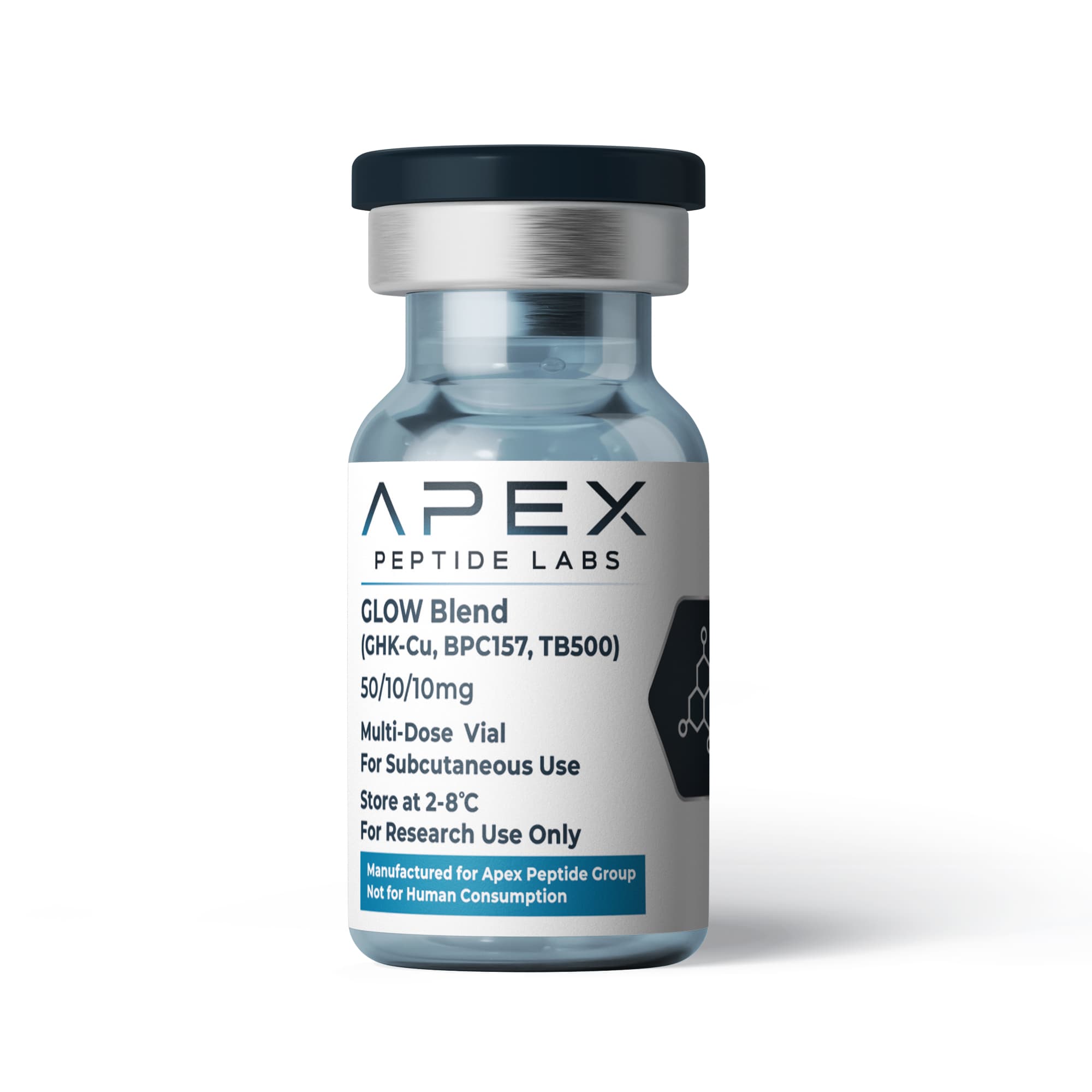
KLOW Blend
Starting at $275.00
Available specs: 80mg| 98%

SKIN, HAIR & AESTHETIC REGENERATION
A Copper-Binding Peptide Studied for Cellular Regeneration and Tissue Remodeling
CHOOSE YOUR PACK
SPEC
DETAIL
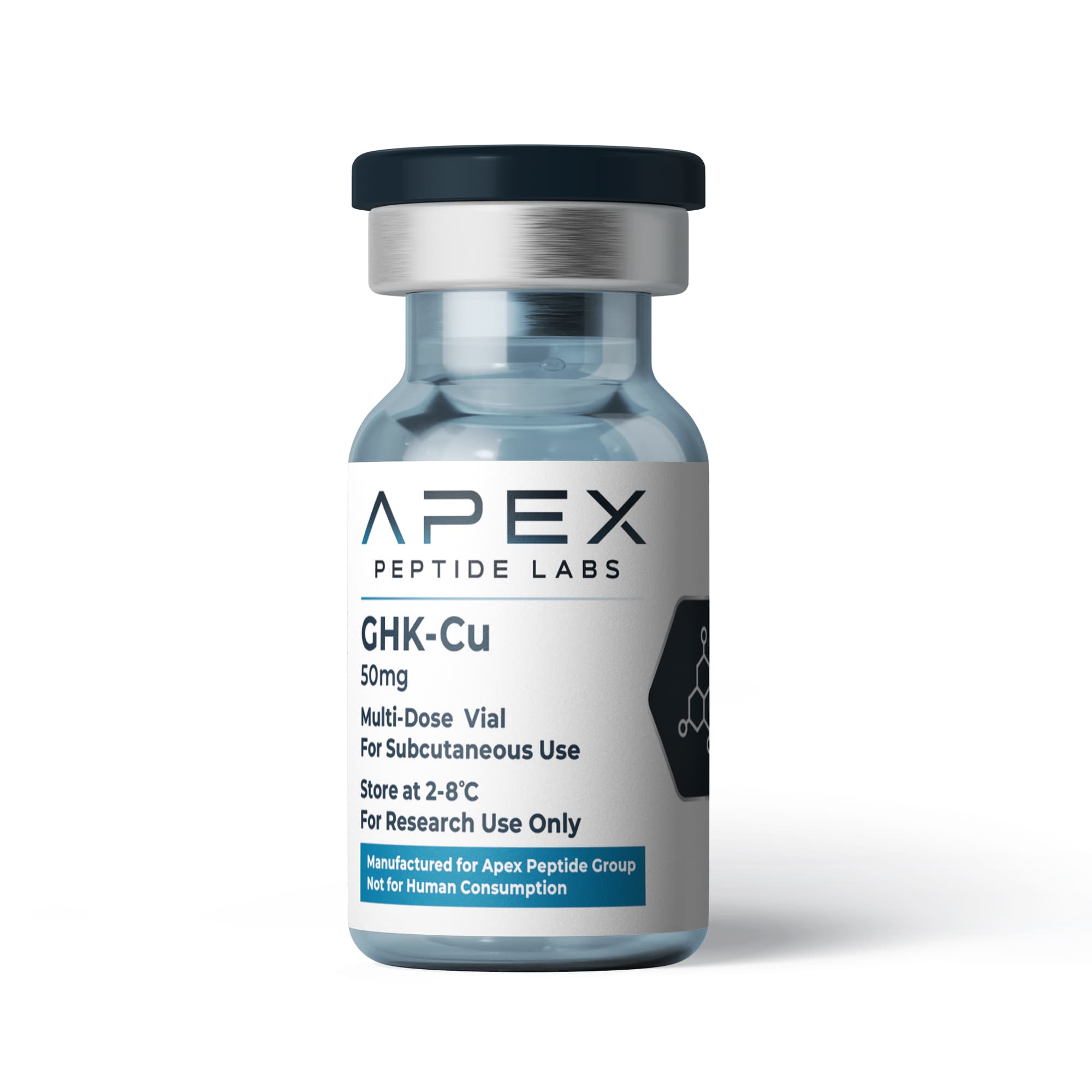
GHK-Cu is a naturally occurring copper-binding peptide composed of three amino acids: glycine, histidine, and lysine. The peptide forms a complex with copper ions and is commonly referred to as glycyl-L-histidyl-L-lysine copper complex.
Researchers have studied GHK-Cu for several decades because of its potential role in cellular regeneration, tissue remodeling, and gene expression regulation. The peptide was originally discovered in human plasma and has since been identified in saliva and urine.
Scientific interest in GHK-Cu largely focuses on its ability to interact with biological pathways involved in wound repair, collagen production, and cellular repair mechanisms.
| Peptide Name | GHK-Cu |
|---|---|
| Amino Acid Length | 3 amino acids |
| Molecular Class | Copper-binding peptide |
| Discovery | Human plasma |
| Research Focus | Tissue remodeling and regeneration |
Copper Transport
GHK-Cu binds copper ions and helps transport them to biological systems where copper functions as a cofactor in enzymatic reactions.
Gene Expression Regulation
Some research suggests GHK-Cu may influence gene expression related to tissue repair and cellular regeneration.
Collagen Production
Studies have investigated how GHK-Cu interacts with pathways associated with collagen synthesis and extracellular matrix remodeling.
[Study reference: Journal of Investigative Dermatology]
Researchers study how GHK-Cu influences cellular repair pathways.
Skin Biology
The peptide has been widely studied in research related to skin regeneration and collagen production.
Scientists investigate how copper-binding peptides influence gene expression and cellular communication.
RELATED