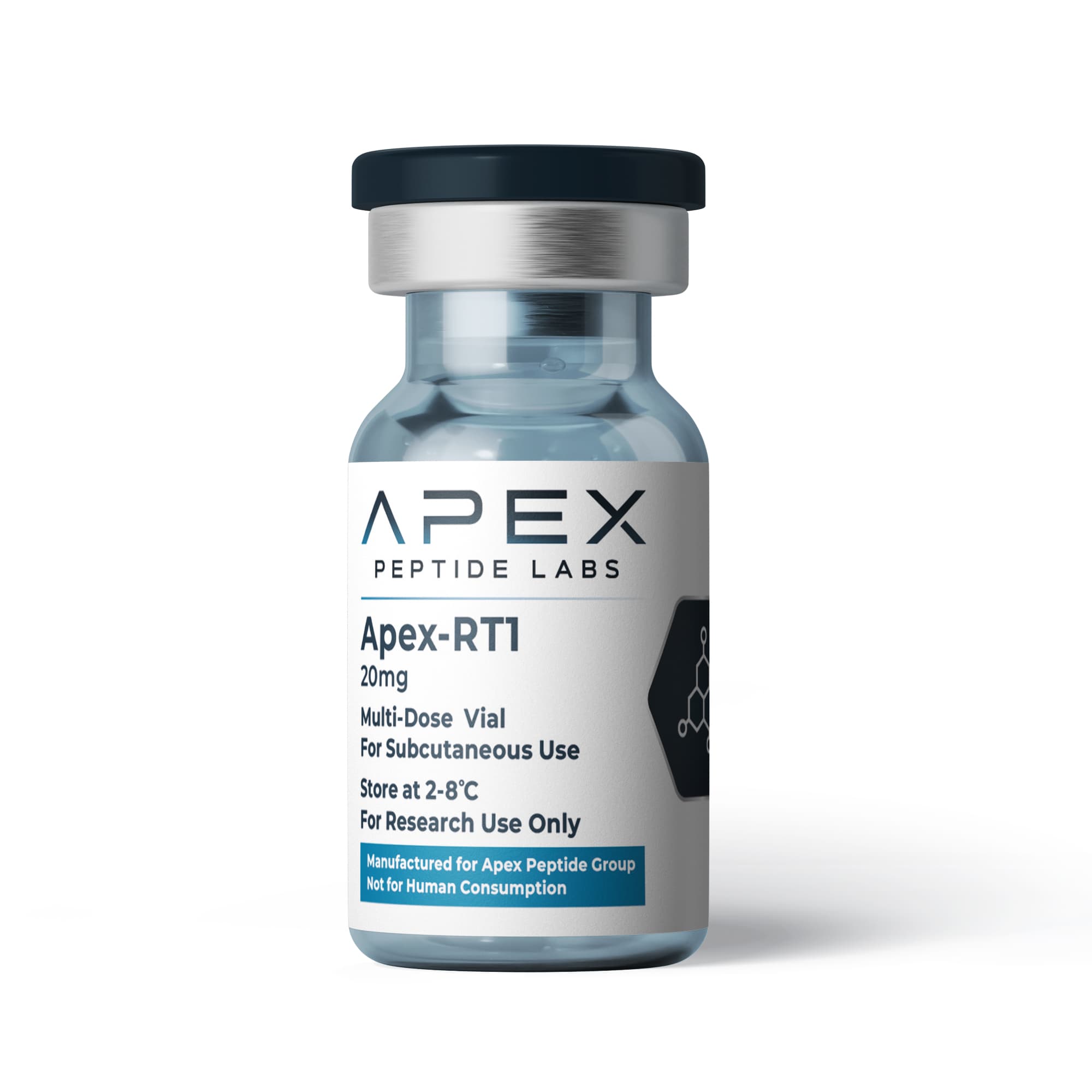
MOTS-C
Starting at $85.00
Available specs: 10mg| 98%


FAT LOSS & METABOLIC OPTIMIZATION
A Research Peptide Studied for Dual-Pathway Metabolic Hormone Signaling
SIZE
CHOOSE YOUR PACK
SPEC
DETAIL
APEX-TZ1 is a research peptide studied for its interaction with metabolic hormone signaling pathways involved in glucose regulation, appetite signaling, and cellular energy balance. Compounds within this category are designed to interact with multiple incretin hormone receptors that coordinate nutrient metabolism and endocrine signaling.
Incretin hormones play an important role in the body’s metabolic response to food intake. They help regulate insulin signaling, glucose metabolism, and satiety signals within the central nervous system. Peptides like APEX-TZ1 are therefore studied for their ability to interact with these pathways simultaneously, allowing researchers to observe how combined hormonal signaling influences metabolic physiology.
Because metabolic regulation involves complex interactions between multiple endocrine signals, compounds that activate more than one receptor pathway can provide valuable insights into how metabolic networks function.
APEX-TZ1 is currently studied in experimental research related to metabolic signaling, hormone regulation, and integrated endocrine system activity.
| Research Name | APEX-TZ1 |
|---|---|
| Compound Type | Synthetic peptide analog |
| Peptide Class | Dual-pathway incretin signaling peptide |
| Molecular Category | Metabolic hormone receptor agonist |
| Research Focus | Metabolic regulation and endocrine signaling |
| Structure | Modified peptide analog |
| Research Status | Investigational |
APEX-TZ1 belongs to a group of synthetic peptide analogs designed to mimic naturally occurring incretin hormones that participate in metabolic signaling. These peptides are engineered to interact with receptors involved in glucose metabolism and hormonal communication within the endocrine system.
Structural modifications within these peptides allow researchers to increase their biological stability and extend receptor interaction time during experimental study. These modifications help scientists investigate how prolonged activation of metabolic receptors may influence biological processes.
Peptides in this category are commonly studied for their influence on:
Current research suggests that peptides in this category interact with multiple incretin hormone receptors that regulate metabolic signaling.
Incretin Hormone Signaling
Incretin hormones coordinate metabolic responses following nutrient intake. Activation of these receptors may influence insulin signaling and glucose metabolism pathways.
Certain incretin receptors interact with neural circuits involved in satiety signaling. Researchers are studying how peptide activation of these pathways influences metabolic regulation.
Endocrine System Integration
Because metabolic hormones function within interconnected endocrine networks, peptides like APEX-TZ1 allow researchers to observe how multiple signaling systems operate together.
[Study reference: Nature Metabolism, 2022]
Researchers are studying how incretin-related peptides influence glucose metabolism and metabolic signaling networks.
Hormone Signaling Networks
Studies explore how coordinated activation of multiple hormone receptors affects endocrine system communication.
Scientists investigate how metabolic peptides influence pathways associated with nutrient utilization and cellular energy regulation.
Endocrine Physiology
APEX-TZ1 is also used as a research tool to explore interactions between different hormone systems.
Dual-Pathway Hormone Research
Experimental studies have investigated how peptides interacting with multiple incretin receptors influence metabolic signaling pathways.
[Study reference: Journal of Clinical Endocrinology & Metabolism]
Researchers continue to study how incretin-related peptides regulate metabolic hormone activity.
[Study reference: Cell Metabolism]
Scientists are investigating whether peptides like APEX-TZ1 may influence:
Research into peptides within this category is ongoing, and long-term biological effects remain under investigation.
Scientific literature frequently notes:
APEX-TZ1 remains an investigational research compound studied primarily in laboratory and experimental settings.
Most available information comes from:
What is APEX-TZ1?
APEX-TZ1 is a synthetic research peptide studied for its role in metabolic hormone signaling.
Why are scientists studying peptides like APEX-TZ1?
Researchers are interested in understanding how metabolic hormone systems regulate energy balance and glucose metabolism.
Is APEX-TZ1 naturally occurring?
No. Peptides in this category are synthetically developed for research purposes.
Is APEX-TZ1 FDA approved?
No. APEX-TZ1 is a research compound that has not been approved by the U.S. Food and Drug Administration.
RELATED